Data exfiltration and DLP detection
A segmented home SOC lab where fake PII is stolen over SMB, detected through Windows file auditing, Suricata and firewall logs in Splunk, then contained with a targeted firewall rule.
What I built
Five virtual machines on two subnets, separated by an OPNsense firewall: a Windows 10 victim, a Windows Server domain controller, Kali Linux as the attacker’s drop server, and Splunk Enterprise as the SIEM.
- Host auditing. I set SACLs and
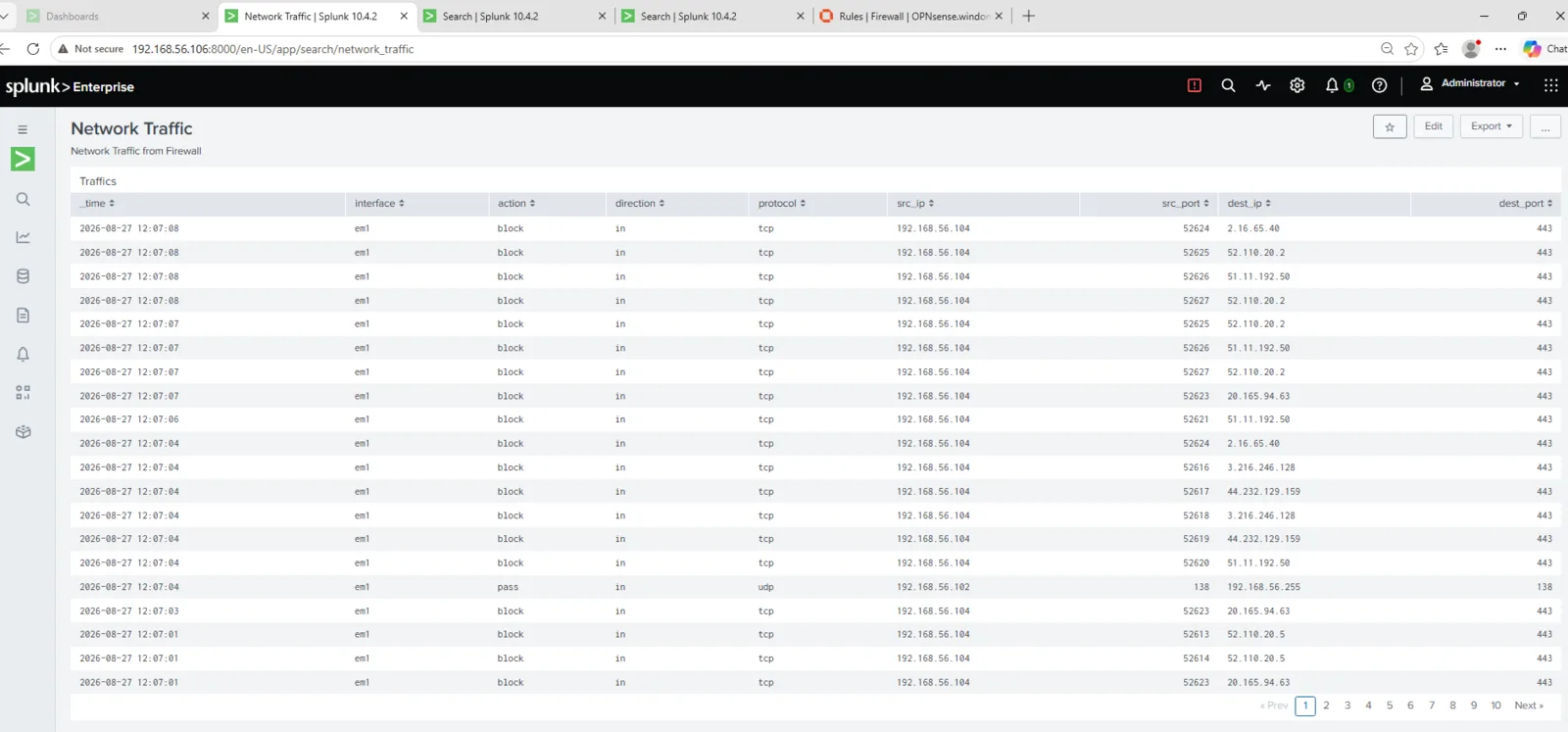
auditpolso Windows logs every access to the sensitive folder (Event ID 4663). - Network detection. Custom Suricata signatures catch suspicious SMB sessions that cross between zones, and OPNsense sends its syslog to Splunk.
- Correlation in Splunk. SPL queries link the file-access events, the PowerShell compression step and the firewall log of the outbound transfer.
- Containment. A targeted Layer 4 block rule stops SMB exfiltration but keeps management access to the firewall and Splunk. I proved it with an on-off-on test using
pfctlandtcpdump.
Issues I hit and fixed
At first, routing and the order of firewall rules either blocked everything or let the transfer through. I traced it with tcpdump on both sides and reordered the rules. Only then did the containment rule behave as intended.